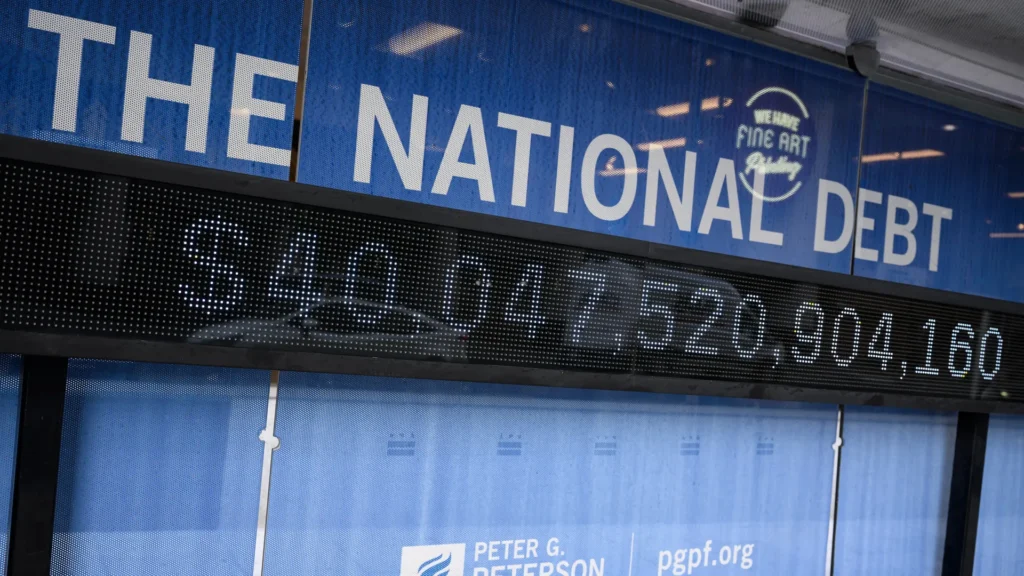
America’s $40 trillion debt could affect mortgages, loans, inflation, and government spending as borrowing costs continue to rise.
The U.S. government’s record debt level is fueling concerns that higher borrowing costs, inflation risks, and budget pressures could eventually affect everyday Americans.
The United States’ national debt surpassed $40 trillion this week, marking a new milestone that has renewed debate over how the government’s growing borrowing could impact consumers, businesses, and the broader economy.
While Americans are not personally responsible for repaying the national debt, economists warn that rising federal obligations could influence future policy decisions, including potential tax increases, spending reductions, and changes to government programs.
Record Debt Raises Borrowing Concerns
The gross federal debt crossed the $40 trillion mark on Wednesday. This total includes money the federal government owes to itself, while economists often examine the approximately $32 trillion in debt held by the public when analyzing economic effects.
Federal borrowing is expected to continue increasing, with President Trump’s tax and spending legislation projected to add trillions of dollars to deficits over the coming decade. The administration has also requested additional funding worth tens of billions of dollars connected to the Iran war.
One major concern is that higher government debt could push borrowing costs higher for consumers and companies.
A recent report from the Conference Board, a nonprofit research organization, warned that increased national debt could place upward pressure on interest rates, potentially making mortgages, student loans, and small-business financing more expensive.
“If investors begin to view U.S. debt as riskier, interest rates could rise further, increasing borrowing costs for expansion, hiring, and investment,” the Conference Board report says.
How Federal Debt Can Influence Interest Rates
Investors may demand higher returns on U.S. government bonds if they become less confident about the country’s financial position. Higher Treasury yields can then affect other areas of the economy.
Brett Loper, executive vice president for policy at the Peter G. Peterson Foundation, explained that mortgage rates often follow movements in the 10-year Treasury note yield, which reflects the return investors expect when lending money to the federal government.
When Treasury yields increase, mortgage rates typically follow.
“If it is costing more and more for the government to borrow … it’s going to push up mortgage rates,” Loper says.
He added that increased government borrowing expenses could also influence auto loans, municipal bonds used for school construction projects, and other types of financing.
Debt Could Increase Inflation Pressure
Beyond interest rates, economists also warn that large debt levels may create inflation risks.
Loper said investors could become concerned that policymakers may eventually turn to measures such as creating more money to manage federal obligations.
“You’re creating risks that we’re going to have to print more money or monetize the debt in some way, and those types of fears cause pressure on inflation,” Loper says.
Rising Interest Payments Limit Government Spending
As the national debt expands, the federal government must allocate more funds toward interest payments. That leaves fewer resources available for other priorities, including defense, infrastructure, and education.
According to Congressional Budget Office projections, the government is expected to spend more than $1 trillion on net interest payments in 2026. That amount would exceed spending on any mandatory program except Social Security and Medicare.
What Happens Next for U.S. Debt?
Washington has so far shown limited progress toward changing the nation’s long-term fiscal outlook, keeping disagreements over taxes and spending unresolved.
However, Loper said Americans are increasingly recognizing how national debt connects to their daily financial challenges, especially through higher mortgage rates.
“are starting to connect the dots” about how the national debt affects them, Loper says, particularly through high mortgage rates. This could influence voter decisions during future midterm elections, he says.
The Congressional Budget Office has said that making federal debt more sustainable will likely require a combination of slower spending growth and increased government revenue.
As debt continues to rise, the debate over America’s financial future is expected to remain a major issue for policymakers and voters.
Key Points
- U.S. national debt exceeded $40 trillion for the first time.
- Economists primarily track the roughly $32 trillion held by the public when assessing economic risks.
- Higher debt could contribute to increased interest rates for mortgages, loans, and business borrowing.
- Rising interest payments may reduce funding flexibility for government programs.
- Long-term debt reduction would likely require spending changes, higher revenue, or both.
Impact Overview
| Issue | Possible Effect on Americans |
|---|---|
| Higher federal borrowing | Increased pressure on interest rates |
| Rising Treasury yields | More expensive mortgages and loans |
| Debt-related inflation concerns | Potential pressure on consumer prices |
| Larger interest payments | Less government funding available for other priorities |
| Fiscal uncertainty | Greater political debate over taxes and spending |

Elijah Romero is a music journalist covering concert tours, ticket announcements, and live show schedules across all genres. She tracks major artist tour dates as they’re announced and helps fans stay updated on presale information, venue details, and where to find tickets. Elijah has been following the live music industry since 2019.