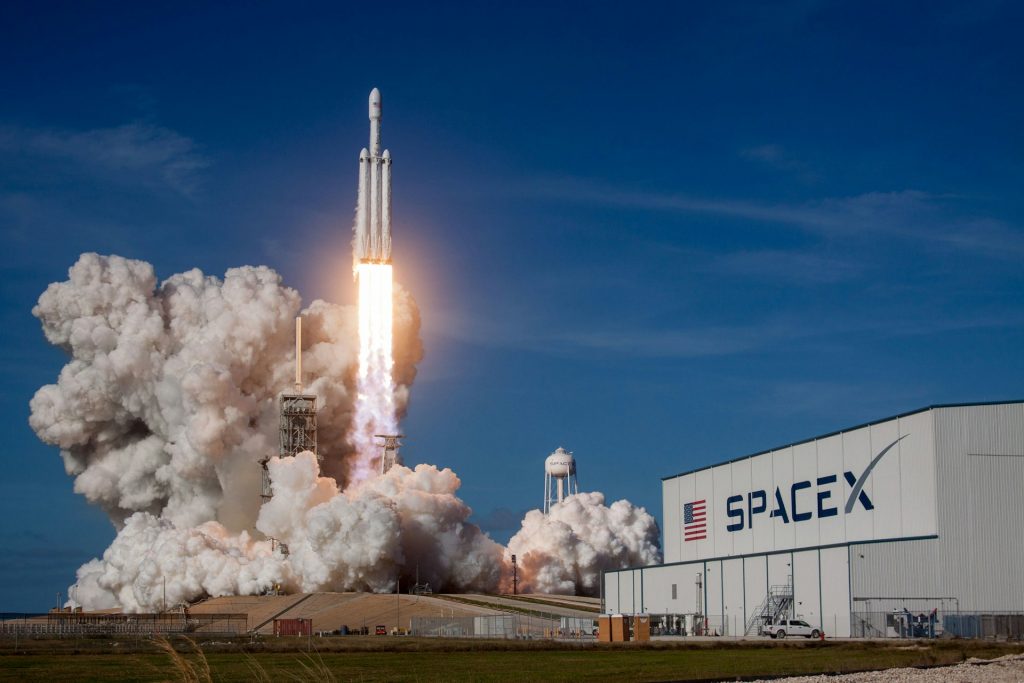
Wall Street is sitting on the edge of its seat for Friday’s market debut of SpaceX. The stock is set to hit the Nasdaq tape at 9:30 AM Eastern, and it’s already shaping up to be an absolute monster. We’re talking the largest initial public offering the market has ever seen. By offloading approximately 555.6 million shares at $135 a pop, Elon Musk’s orbital juggernaut is pulling in roughly $75 billion. For context, that easily dwarfs the previous heavyweight champion, Saudi Aramco, which managed to raise $29 billion back in 2019.
The sheer scale of this debut instantly slaps a $1.77 trillion valuation on the company, making it worth more than Meta right out of the gate. And the kicker? It officially catapults Musk into an entirely new stratosphere of wealth, minting him as the world’s very first trillionaire—at least on paper, when you tally up his massive stakes in both SpaceX and Tesla.
Pricing the Hype
What makes this offering particularly fascinating is how Musk orchestrated the mechanics of the deal. According to SEC filings, SpaceX completely bypassed the traditional Wall Street dog-and-pony show. Instead of floating a price band and feeling out institutional appetite to build a book, they simply slapped a flat $135 price tag on the shares upfront. Even more unorthodox is the cap table strategy: Musk intentionally carved out a massive 30% chunk of the offering specifically for retail investors, directly tipping his hat to his massive, cult-like fanbase.
If the derivatives markets are any indication, that army of retail traders is about to see a massive pop. Pre-market trading through platforms like IG International in Singapore is already pricing the aerospace company at an eye-watering $2.4 trillion. Assuming that momentum holds when the opening bell rings, we’re looking at an explosive jump of more than 35% over the initial issue price.
Bleeding Cash, Selling the Cosmos
When you actually dig into the balance sheet, there’s a jarring disconnect between the astronomical valuation and the raw fundamentals. Make no mistake, SpaceX is bleeding cash. Investors are essentially buying an aggressive call option on the future of humanity in space. Last year, the company posted a brutal $4.94 billion net loss against $18.67 billion in top-line revenue. A massive chunk of that cash burn is tied directly to the sheer R&D overhead required to get the colossal Starship rocket off the ground.
The financial engine keeping the lights on right now is Starlink. The satellite internet constellation hauled in roughly $11 billion of that revenue, powered by an armada of some 9,600 satellites currently sitting in low Earth orbit. By late March, Starlink had already scooped up a solid 10 million subscribers. Right now, users still rely on clunky ground terminals, but the next generation of the tech promises direct-to-cell connectivity, effectively blanketing global dead zones with mobile internet from space. Amazon is trying to spin up a rival constellation but is lagging miles behind on hardware in orbit.
Orbiting Data Centers and Absolute Control
Internet access might just be the bridge. The real endgame for long-term revenue growth could actually be artificial intelligence. SpaceX wants a piece of the enterprise AI applications market, a sector currently pegged at a staggering $22 trillion globally. Musk is kicking around the idea of deploying massive data centers directly in orbit. Whether the thermal dynamics and orbital mechanics actually make that feasible is a totally open question, but the market seems more than willing to bankroll the experiment.
